Become an ESI Therapist
A profound training for those who wish to integrate body, emotions, sexuality, and consciousness, and learn to guide transformative processes with presence, ethics, and professional competence.

11 online modules

4 learning cycles

2 in-person retreats

Comprehensive training in sexuality

WHAT IS ESI?
Embodied Sexuality Integration
ESI is a therapeutic approach that integrates body, mind, and energy, focusing on physical and emotional aspects of sexuality and relationships.
Through the study and practical exploration of emotional and body awareness, it brings together neuroscience, sexology, somatic therapies, and ancestral wisdom from Tantra and Taoism.
An ethical, practical, and profound approach for your personal life and your professional therapeutic practice.
HOW DOES THE JOURNEY WORK?
A complete and integrated training
11 online modules divided into 4 learning cycles + 2 in-person retreats.
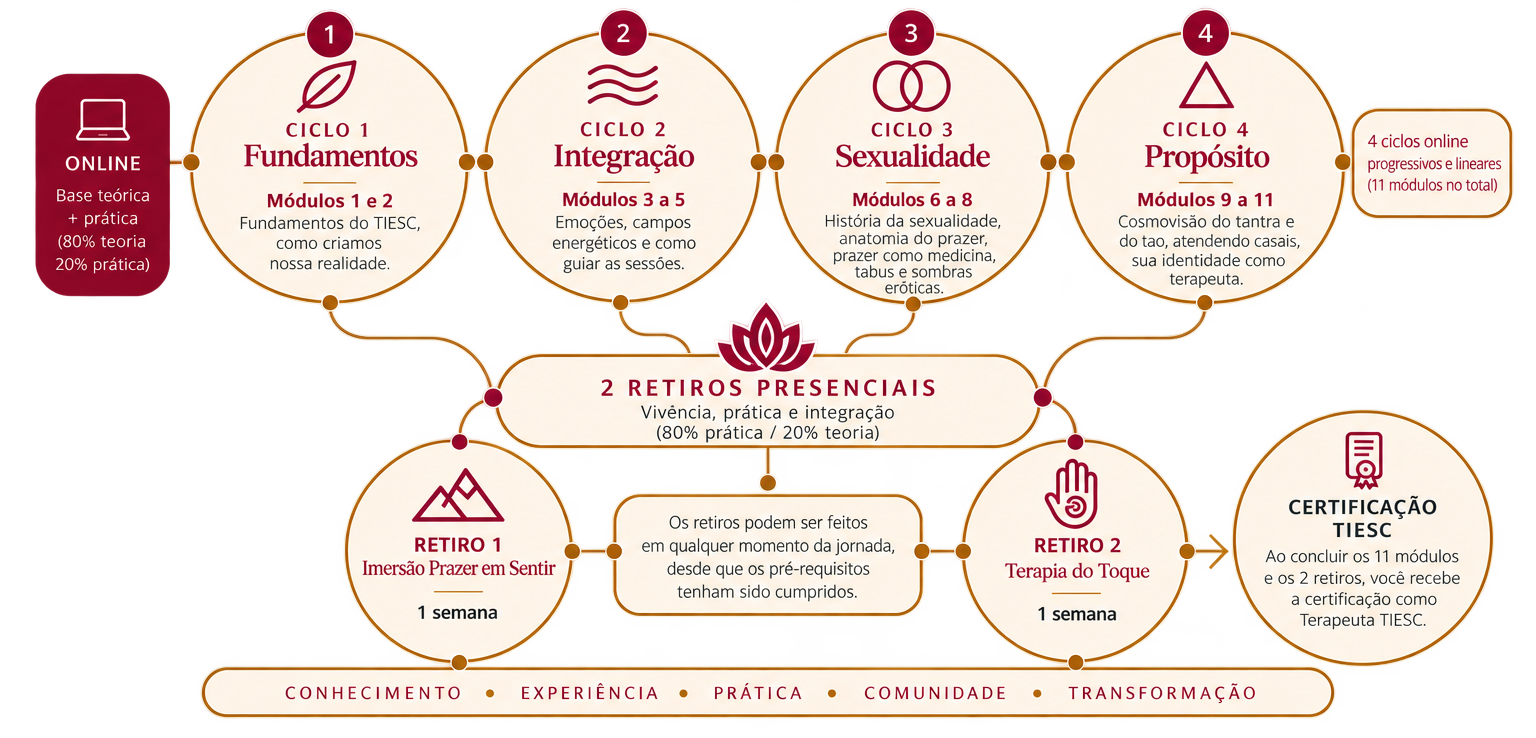
THE 4 LEARNING CYCLES
11 modules to build your foundation and develop your practice.
January 26 – February 23
Cycle 1 — Foundations
The first cycle provides the foundation for everything that follows. We will explore the fundamentals of ESI and how to put them into practice.
Modules 1 and 2.
Module 1 - Foundations of ESI
-
What is ESI — Embodied Sexuality Integration?
-
What are the objectives of Embodied Sexuality Integration?
-
ESI session structure and transformational process.
-
The four therapeutic approaches integrated into ESI.
-
Ethics.
-
Projection.
-
Resistance.
-
Repression.
-
Subjectivity.
-
Transference and countertransference.
-
Differences between online and in-person sessions.
-
How body–mind–spirit integration takes place within ESI.
-
Power dynamics between therapist and client, or facilitator and student, and their ethical implications.
Module 2 - How we create our reality
-
How the mind works.
-
The difference between the mind and the brain.
-
What is trauma?
-
How to work with trauma through a holistic approach.
-
The central and autonomic nervous systems.
-
The vagus nerve and Polyvagal Theory.
-
The nervous system's responses to stimuli.
-
Healthy and unhealthy nervous system functioning.
-
The nervous system's responses to external stimuli from a neurolinguistic perspective.
-
How unconscious patterns are formed through the Tantric perspective.
-
Virtues and non-virtues through the Taoist perspective.
-
The process and importance of nervous system regulation during a therapeutic session.
-
The heart and lungs.
-
The importance of breathing.
-
The importance of consent within the therapeutic process.
-
How to apply consent as a therapist and in your personal relationships.
-
The Wheel of Consent.
-
Non-verbal consent.
-
The grey areas of consent.
-
What consent is — and what it is not.

March 2 – May 18
Cycle 2 — Integration
Integration takes place through awareness of emotions, energetic connection, and how to structure your therapeutic sessions.
Modules 3 to 5
Module 3 — Emotions & How They Take Hold of Us.
- What are emotions?
- Emotions and sentimentality.
- The physiology of emotions.
- Types of emotions.
- The Wheel of Emotions.
- Emotional repression and control.
- Emotional intelligence and maturity.
- Wilhelm Reich — Repressed sexual energy and neuroses.
- Sigmund Freud — Libido energy and stages of psychosexual development.
- The therapist's self-awareness in relation to their own emotions.
- Anger.
- Sadness.
- Depression.
- Fear.
- Guilt.
- Envy and jealousy.
- Judgment.
- Love.
- How emotions function and the process of cognitive-somatic release.
- How childhood perceptions lead us to create and reinforce fantasies.
- The Drama Triangle and how to work with it.
- Six relational movements.
- Triggers and resistance.
- How to respond when someone shows resistance to accessing their emotions.
- Working with, listening to, and deepening emotional experiences.
- Protective behavioral patterns.
- The Wounded Child — different child archetypes and behavioral patterns.
- Self-criticism and self-deprecation (the victim role and the desire to be loved).
- Attachment Theory.
- What shadows are and how to work with them.
- Emotional blockages and armor — the muscular, joint, and facial systems.
- The hormonal and endocrine systems and their relationship with emotions.
Module 4 - Energy & subtle body
- Psychic and energetic mastery (the importance of energetic awareness and sensitivity to subtle sensations).
- The theory of the subtle bodies.
- Chi, Prana, and Ki.
- How does energy move?
- Shiva and Shakti; Yin and Yang.
- Working with polarities.
- The Hindu energy system.
- The seven bodies and the seven chakras.
- Secondary chakras.
- Marma points.
- Using energy in therapeutic sessions (Tantric and non-Tantric approaches).
- Chi and its different forms.
- Meridians.
- Creating your own energy field.
- Understanding another person's energy field.
- Energetic protection systems.
Module 5 — Guiding Therapeutic Sessions
-
Rapport.
-
Negotiation.
-
Active listening.
-
Nonviolent Communication (NVC).
-
Presence.
-
Neutrality.
-
Learning to distinguish your own interpretation of the world from the meanings and symbols carried by the client.
-
How to explore the deeper intentions of your client.
-
How to create an effective client intake and assessment form (anamnesis).

May 25 – October 20
Cycle 3 — Sexuality
Here, we will explore sexuality from multiple perspectives, respecting its diversity and complexity.
Modules 6 to 9
Module 6 - The history & sociology of sexuality
-
Sex: From its origins to the present day.
-
Geopolitical changes and their influence on sexuality.
-
The social construction of womanhood throughout history and its implications today.
-
The social construction of manhood throughout history and its implications today.
-
Contemporary changes in gender roles.
-
Power dynamics between gender roles.
-
The actual definitions of “patriarchy” and “matriarchy” and how they are reflected in practice.
-
Sexual revolutions throughout history.
-
Homosexuality and transgender identities throughout history.
-
Masturbation, anal sex, BDSM, and male and female pleasure throughout history.
-
Rape, abuse, and other forms of sexual violence throughout history.
-
African sexual history.
-
Indigenous sexual history in Mesoamerica.
-
European sexual history.
-
The patchwork of influences that shaped Brazilian sexuality.
-
The influence of religions on sexuality.
-
Sexuality and semiotics.
-
Intergenerational sexuality: differences in perspectives on sexuality across generations in contemporary society.
-
Waves of feminism.
-
Incels and Red Pill movements.
-
The influence of algorithms, social media, and AI on sexuality and gender polarization.
Module 7 — Pleasure as Medicine
- What is sexuality?
- Understanding biological sex, gender identity, sexual orientation, gender expression, and related concepts.
- Understanding the LGBTQIAPN+ acronym.
- How does sexual energy move?
- The five stages of sexuality.
- Four obstacles to sexual health and pleasure.
- The anatomy of pleasure and the function of the genitals.
- Embryological development and anatomical correspondences of the genitals.
- The human sexual response cycle.
- The physiology of orgasm.
- Types of orgasm.
- Male orgasms.
- Male squirting.
- Female orgasms.
- Female squirting.
- Masculinities.
- Challenges in working with men.
- The anatomy of penile pleasure.
- Common male sexual concerns and dysfunctions.
- Femininities.
- Challenges in working with women.
- The anatomy of vaginal pleasure.
- Common female sexual concerns and dysfunctions.
- Working with transgender and intersex people.
- Challenges in working with transgender and intersex people.
- Anatomical considerations when working with transgender and intersex people.
- Erotic types.
- Sexual response.
Module 8 — Taboos & Erotic Shadows
- The anus and perineum — Anatomy of pleasure.
- Masturbation.
- Pornography.
- Fetishes and paraphilias.
- Understanding BDSM dynamics.
- Erotic shadows.
- Polarities and dualities — Inner alchemy.
- Sexually transmitted infections (STIs).
- Diseases of the genital tract.
- Medications that affect libido.
Module 9 - Couples & relationship dynamics
-
Working with couples through the ESI approach.
-
Relationships as mirrors of our light and shadow aspects.
-
Individual issues that influence relational dynamics.
-
Passion, love, and Eros.
-
Understanding relationship dynamics: monogamy and non-monogamy.
-
Understanding the theory of the relational body.
-
The theory of polarities: mature and immature masculine and feminine.
-
How to work with polarities in relationships.
-
Understanding differences between partners.
-
Representational systems.
-
Instinct theory.
-
Erotic languages.
-
Working with incompatibilities between partners through each of these theoretical frameworks.
-
Working with projections and different types of love.
-
Wounded inner children and their influence on relationships.
-
Addressing jealousy, insecurity, infidelity, and abusive relationships.
-
Attachment Theory — how to work with each attachment style.
-
The Drama Triangle and how to work with it.
-
The eight most common couples' concerns and how to work with each one.
October 27 – December 14
Cycle 4 — Purpose
After completing the entire journey, we will move towards finding your own path and purpose as a therapist.
Modules 10 to 11
Module 10 - Tantra, Taoism & esoteric philosophies
- What is Tantra?
- Right-hand, left-hand, and middle-path Tantra.
- Understanding the concept of non-duality in Tantra.
- Understanding the concept of desire in Tantric traditions.
- Understanding the deeper meaning of “living in presence.”
- Shiva, Brahma, and Vishnu.
- The Mahavidyas — the ten faces of the Great Goddess.
- Tantra and relationships.
- Tantra and sexuality.
- Tantra and Neo-Tantra.
- Freedom and responsibility within Tantric traditions.
- Guru–disciple transmission.
- Jing: Sexual energy in Taoism.
- Understanding the differences between the aims of Taoist practices and Tantric practices.
- The Jade Dragon and the White Tigress — Taoist practices for cultivating, preserving, and circulating Jing.
- Lilith in Kabbalah — the deeper meaning of the Book of Genesis.
- How masculine and feminine energies, and the archetypes of polarity, intersect across these three philosophical traditions.
Module 11 - Building your therapeutic practice
-
Defining your professional DNA.
-
Developing your professional positioning.
-
Creating your business plan.
-
Promoting your work and professional image with authenticity and love.
-
Financial planning and management.
THE JOURNEY ALSO HAPPENS IN THE BODY
In-person retreats
ESI is a process of integral transformation, and the training should be no different.
These two immersive experiences provide the opportunity to embody the transformation you may one day help others achieve.
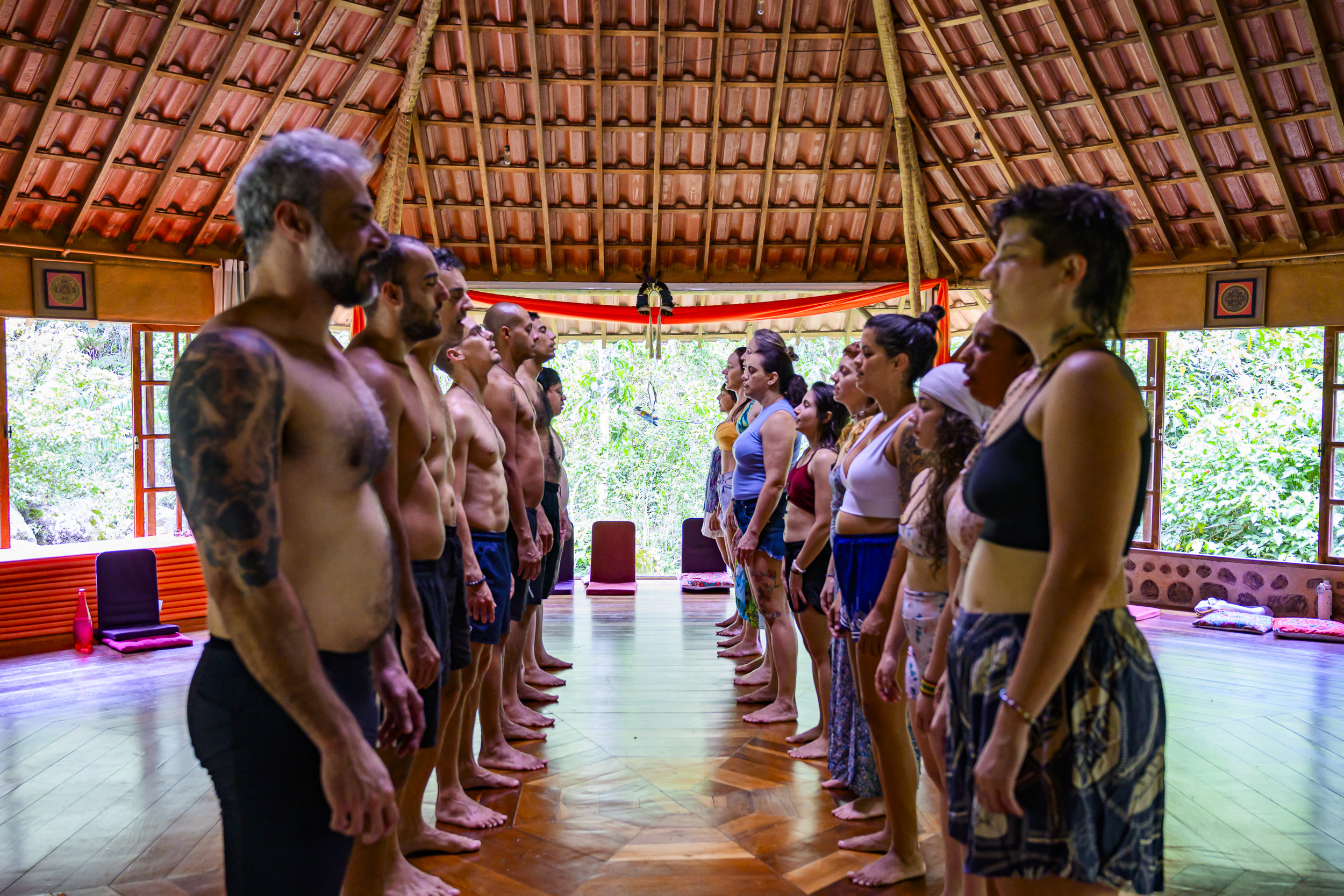
Retreat 1
Pleasure in Feeling Immersion
A profound journey towards understanding how you relate to your emotions, your pleasure, your sexuality, your shadows, and others.

Retreat 2
Touch Therapy
Theory and practice of different touch and massage techniques (body and genital), used to work with the emotional body.
INVESTMENT
Choose the path that feels right for you.
1 - Complete Training
11 online modules + 2 retreats*
For those who wish to become fully trained therapists, ready to work online and in person, with and without touch, addressing the different dimensions of human experience.
R$ 6.450*
Portugal: € 1.095
Up to 12 monthly installments of R$591.25.
2 - Psychotherapy Training
11 online modules + Retreat 1*
For those who wish to become therapists and work without touch-based techniques, or who are already psychologists and/or sexologists looking to expand their practice.
R$ 5.250*
Portugal: € 895
Up to 12 monthly installments of R$481.25.
3 - Touch Therapy Training
5 online modules + Retreat 2*
For those who already work with massage and wish to deepen their skills in emotional techniques, body mapping, and genital dearmoring.
R$ 4.250*
Portugal: € 729
Up to 12 monthly installments of R$389.58.
4 - Online Modules Only**
11 online modules
For those who wish to explore an integral understanding of sexuality, relationships, and emotions, but do not intend to become therapists.
R$ 4.750
Portugal: € 812
Up to 12 monthly installments of R$445.42.
*Accommodation and meals during the retreats are not included in the price.
**This option does not include therapist certification. However, certification can be obtained later by enrolling in the retreats.
HOW TO APPLY
It's simple. Here's how it works.
1 — Submit your application
Click the button, complete the application form, and submit your details.
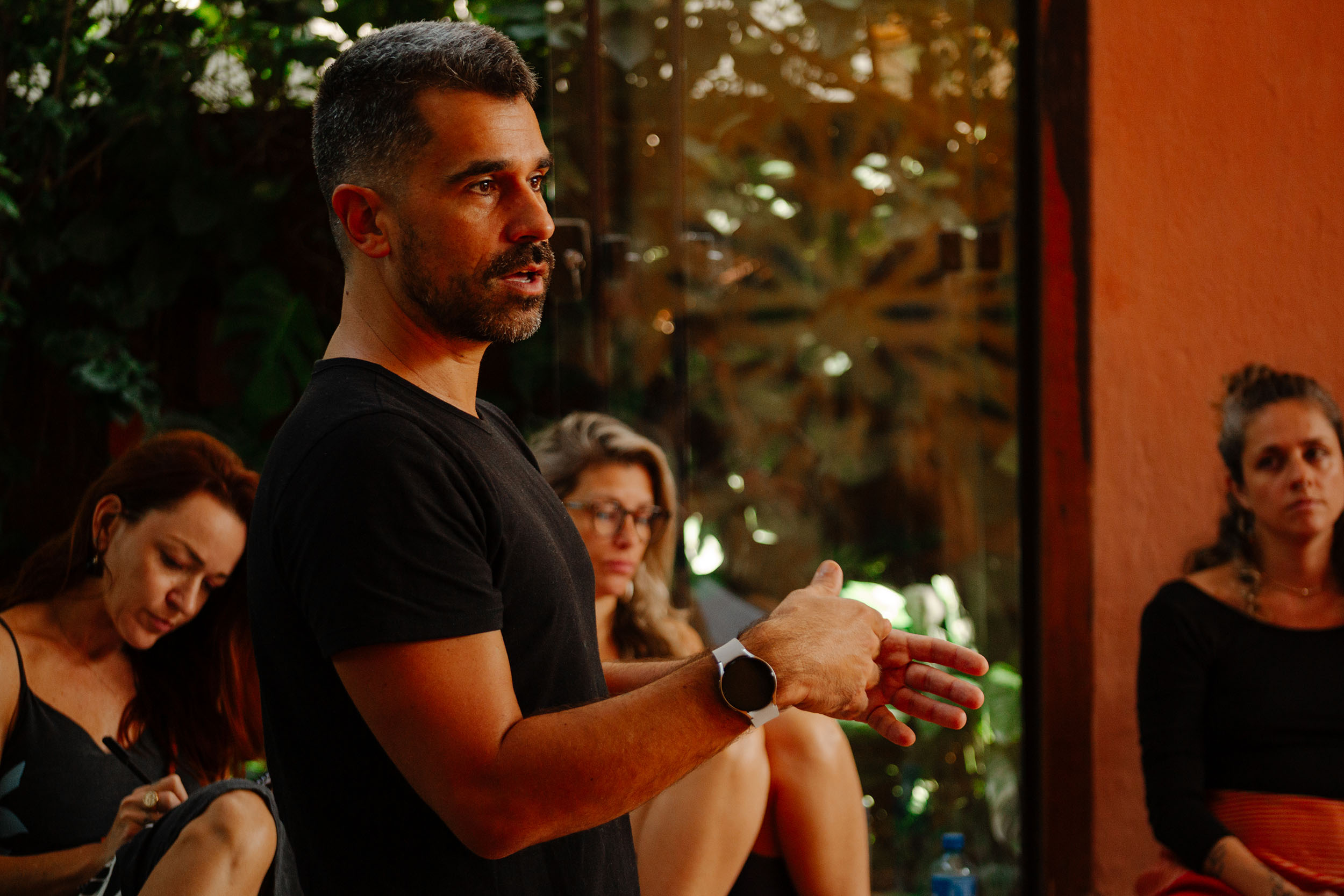
2 — Have a conversation with me
I will contact you to arrange a video interview lasting up to 30 minutes.
3 — Sign the agreement and make your payment
After the interview and approval, you will receive the agreement and the payment details we have agreed upon.
4 — Welcome to the journey!
You're now part of the training. Get ready for the next steps and updates.
This training is for you if:
-
You are a psychologist or sexologist interested in learning alternative approaches to sexual therapy.
-
You are a Tantra therapist looking to expand your theoretical foundation and practical skills.
-
You are a holistic therapist wishing to deepen your work and incorporate the body as a tool for healing.
-
You seek meaningful and profound transformation in your life and relationships.
-
You are willing to explore yourself, your patterns, and your shadows.
-
You value ethics, presence, and working responsibly with people.
This may not be the right time for you if:
-
You are only looking to learn techniques without experiencing them yourself.
-
You have no interest in self-exploration.
-
You are looking for a quick, superficial course solely to obtain a certificate.
-
You are unwilling to engage in emotional processes.
-
You want certification without genuine participation.
-
You feel uncomfortable exploring sexuality, nudity, pleasure, or genital touch.
WHAT MAKES ESI DIFFERENT?
Genuine Integration: A meaningful integration of body, emotions, and sexuality.

Comprehensive Foundation: A strong theoretical foundation combined with deep practical experience.
Science and Wisdom: Science alongside spiritual and ancestral knowledge.
Transformative Practice: Ongoing personal work throughout each student's journey, not limited to classroom sessions.

Learning to Guide Real Processes: Practical skills and specific techniques tailored to each person's needs.
Community and Ongoing Support: A supportive community throughout your journey.
WHAT WILL YOU HAVE ACCESS TO AS AN ESI STUDENT?

Student Area:
Two years of access.

Therapist Directory:
Visibility and promotion of your professional profile.
Discounts:
Special prices on courses and products.

Exclusive Specializations:
Access to exclusive specializations and opportunities for continuing education.

Complete Learning Materials:
Comprehensive educational resources.

Lifetime Support:
Ongoing support throughout your professional journey.
STILL HAVE QUESTIONS?
I'm a beginner in this field. Can I enroll?
Absolutely! The entire training has been designed to welcome both beginners and those with previous experience, allowing everyone to engage in their own personal development while learning practical tools. Everyone will start from the same foundation.
I'm not interested in becoming a therapist. Is this course right for me?
The training includes a substantial amount of theoretical content, which may feel overwhelming if your only goal is personal development.
If you're genuinely interested in the subject, it can certainly be a valuable experience. However, if your main intention is to deepen your self-awareness and explore your own sexuality, I recommend enrolling in the Pleasure in Feeling Immersion instead.
The Immersion is designed specifically for this purpose. It is a required part of the professional training for those who wish to become ESI therapists, but it is also open to anyone who wants to better understand themselves and their sexuality.
Will I have to be naked?
Some practices during the retreats involve nudity, particularly genital massage practices. However, every activity takes place only with the consent of everyone involved, and participants are always free to respect their own boundaries and personal limits.
Can I start the Journey at any time?
Yes! All online classes will be recorded, so you can study at your own pace. You just need to keep an eye on the retreat dates to make sure you can attend the in-person experiences.
How many practical tools and techniques will I learn during the training?
It depends on the pace and development of each group, but between massage techniques, somatic tools, and psychotherapy techniques, you will learn well over 100 different tools and practices.
If you have any other questions, feel free.
Ready to take the next step?